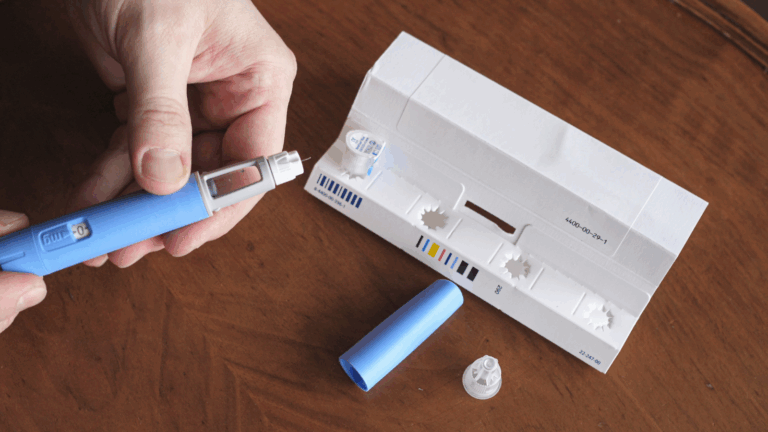
Expert Opinion on Pharmacotherapy has published Columbia Data Analytics’ original research evaluating the impact of semaglutide use on chronic kidney disease (CKD) risk among patients with type 2 diabetes (T2D) using an external control arm built from real‑world data (RWD).
The analysis leverages large-scale longitudinal claims data to assess whether the renoprotective effect observed in the FLOW randomized controlled trial is preserved in routine clinical practice.
Why this matters
CKD remains common and frequently underdiagnosed, and T2D is a leading driver of CKD progression and kidney failure. While randomized trials are the standard for estimating treatment effects, real‑world evidence can help answer a different question: Do outcomes hold in broader, more heterogeneous populations under real-world care patterns?
Overview
Design: External control arm using real‑world data aligned to FLOW trial eligibility criteria.
Data source: Kythera Labs longitudinal medical and pharmacy claims (June 2019–June 2024), with linkage potential to electronic medical records for more granular elements (e.g., labs/vitals where available).
Outcomes: Major kidney disease events, defined as kidney failure onset or a sustained ≥50% decline in eGFR; in the real‑world implementation, outcomes were identified via ICD‑10‑CM diagnosis codes (including proxy definitions where laboratory measures were limited).
Methods: Propensity score matching (1:1; stringent caliper) and Cox regression to estimate risk-adjusted outcomes; sensitivity analyses varied GLP‑1 receptor agonist washout windows (30/180/365 days) and assessed long-term exposure definitions.
Key Findings
After matching, the analysis compared 17,058 semaglutide initiators vs 17,058 matched comparators (no semaglutide or other GLP‑1RA during identification). Mean follow‑up was ~3.04 years.
Primary Outcomes
-
702 vs 1,068 events (semaglutide vs comparator)
-
Hazard ratio (HR): 0.74 (95% CI 0.67–0.81)
-
26% lower risk of major kidney disease events associated with semaglutide in routine care
Consistency with FLOW: Effect was consistent with FLOW’s ~24% relative risk reduction (FLOW HR ~0.76 as cited by the authors).
Component outcomes (illustrative):
-
Relative risk for kidney failure reported as 0.62
-
Relative risk for ≥50% eGFR decline reported as 0.76
Robustness: Sensitivity analyses extending prior GLP‑1RA exclusion to 180 and 365 days yielded consistent effect estimates (HRs ~0.74)
Practical implication: The real‑world cohort showed higher absolute event rates than the trial, translating into a lower number needed to treat (NNT) to prevent one major kidney event (31 vs 44 reported for FLOW).
Observational RWE studies, no matter how rigorous, can be affected by:
-
Outcome misclassification (especially where claims codes proxy for lab-defined kidney outcomes)
-
Residual confounding (including healthy user bias and unmeasured clinical/provider factors)
-
Medication adherence uncertainty
-
Missing clinical severity markers (e.g., albuminuria, HbA1c)
Results should be interpreted as associations observed in routine care, not as a replacement for randomized evidence.
Looking to augment an RCT with RWE, build an external control arm, or evaluate outcomes at scale?
CDA supports protocol-driven RWE generation across therapeutic areas, including comparator design and time-to-event effectiveness and safety studies using large longitudinal datasets.