
The Inflation Reduction Act (IRA) has introduced a new negotiation environment for Medicare, where timing matters. Small molecules face negotiation sooner (9 years) than biologics (13 years).
In our review of the evidence presented at ISPOR Europe, we see early signals that the IRA is influencing how companies invest, how they prioritize development choices, and how they plan post-launch evidence generation.
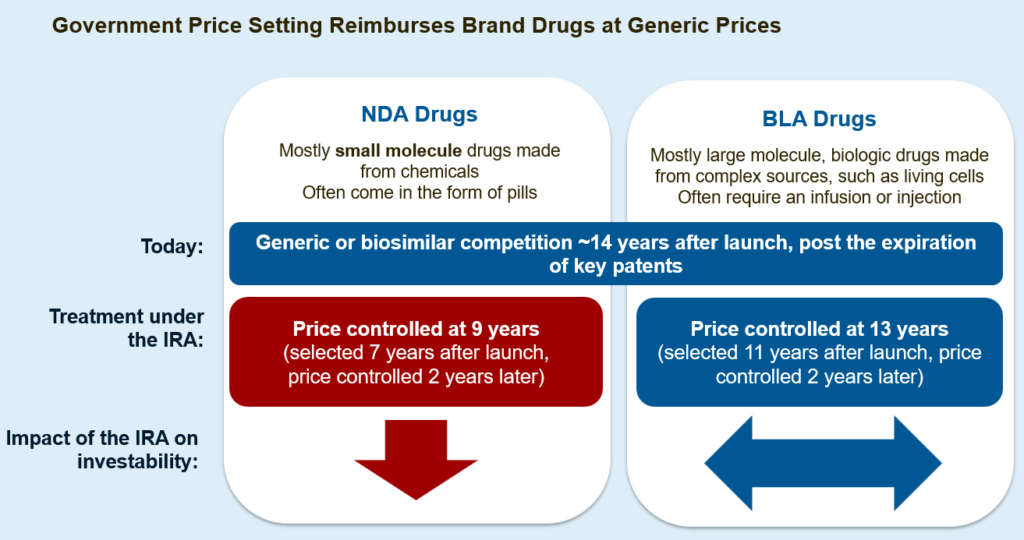
What’s changing
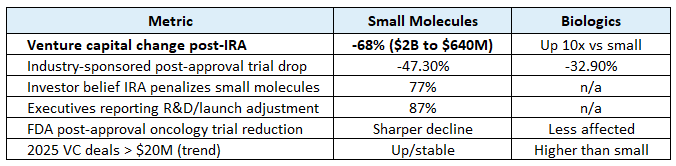
Investment is shifting away from small molecules. Reported venture capital investment in small molecules declined sharply post-IRA, down 68% ($2B to $640M), and 2024 investment levels favored large molecules by roughly 10×.
Post-approval evidence generation is contracting. Industry-sponsored post-approval trials declined 38.4% overall after IRA enactment, with a steeper drop for small molecules (-47.3%) vs biologics (-32.9%).
Strategy is adapting in real time. Survey results included in the same analysis suggest broad belief that the IRA disincentivizes small-molecule R&D and that many companies are already changing launch plans and prioritization.
Post-IRA Investment and Innovation Impact: Small Molecules vs Biologics
IRA negotiation readiness
Across therapeutic areas, the negotiation clock is moving earlier for many products, so value proof needs to move earlier as well, by focusing on three practical moves:
-
- Accelerate value evidence, especially for small molecules. Build early comparative context, durability evidence, and clear population definition so the value story is strong well before negotiation risk escalates.
-
- Make lifecycle and label expansion strategy explicit. Align launch and expansions with Medicare exposure and the IRA timeline rather than treating access implications as a late-stage consideration.
-
- Differentiate on evidence as post-approval trials decline. A proactive RWE/HEOR roadmap can reduce uncertainty and strengthen positioning when broader post-approval research is contracting.
CDA can help
Get a focused discussion on evidence strategy and negotiation readiness aligned to IRA timelines.